Cautious Optimism in North America’s Lubricant Talent Market
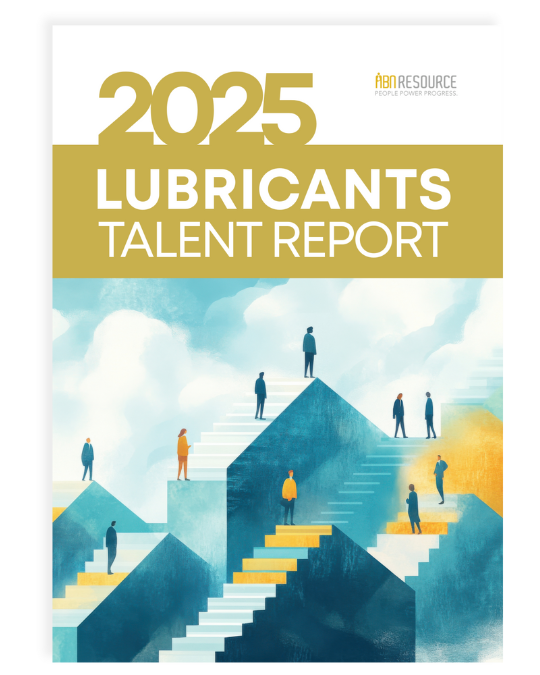
In the Lubricants Talent Report 2025, published by industry recruitment firm and ILMA member ABN Resource, the United States emerges with one of the most positive workplace outlooks. One major contributor to the high level of satisfaction is top-tier compensation.
At the same time, the data flags looming leadership succession gaps and evolving expectations around careers that North American employers and professionals must heed. In short, it’s a picture of a mostly content yet watchful workforce, brimming with experience and confidence but wary of headwinds ahead.
North America’s Cautious Optimism in Outlook
In the 2025 survey, North American lubricant professionals expressed a guardedly positive sentiment about the industry’s future. Nearly 60% of respondents in the region described their outlook as optimistic or cautiously optimistic. This was a more upbeat stance than Europe’s tepid “holding pattern” mood, and closer to the confidence seen in fast-growth markets.
Yet optimism in North America is tempered by realism. Almost 24% voiced concern or strong concern about the outlook, one of the most worried cohorts globally. This duality reflects confidence in the region’s solid market fundamentals coupled with an acute awareness of macro risks, from recession fears and inflation to geopolitical tensions, that could quickly alter the landscape.
As the report insightfully notes, “morale is local” – North America can harbour “pockets of anxiety in one territory and sparks of ambition in another”. For leaders, understanding this nuanced sentiment is key: North American teams see opportunity ahead, but they are keeping a wary eye on disruptive headwinds and expect leadership to do the same.
Salary Growth Slows but Remains Strong
After the exceptional pay raises of 2024, 2025 brought a more moderate compensation trend in North America. Just over half of North American professionals participating in the survey received a raise in the past year, and most of those increases were modest. About one-third of respondents saw no change in salary, and another one-third enjoyed only a small 1–5% uptick. The average pay rise in the region was around 9%, a comedown from the double-digit jumps of the previous year. This cooling-off reflects employers tightening costs amid uncertainty, essentially finding a new equilibrium after 2024’s inflation-fuelled wage spikes.
Crucially, however, slower raises have not dented morale. In fact, job satisfaction rose despite the paycheck plateau. This suggests that fair pay has become table stakes: Professionals expect to be paid competitively, and once that baseline is met, other factors determine their enthusiasm. North American firms, by and large, are meeting that pay baseline. The region continues to command top dollar for talent, and it is “the most lucrative region for salary earnings by far” in the lubricants industry, according to the report. Early-career professionals in North America often start in six figures, and mid-career salaries far outpace those of peers in Europe or Asia.
Talent Is More Reluctant to Move
One of the standout North America insights from the report is a remarkably stable workforce. North American respondents reported the lowest inclination to change jobs of any region. Forty-seven percent said they have no plans to leave their current employer (the highest “stay put” rate globally), and only 14% are actively job-hunting (the lowest active turnover risk).
In effect, nearly half the workforce is content to stay, suggesting a level of anchoring and loyalty that outstrips Europe and far exceeds more volatile regions like Africa or Latin America. Possible reasons for North America’s strong talent retention include the strong compensation and established career pathways, as well as a slightly cooler job market in 2025 that has reduced the lure of external opportunities.
For employers, this stability provides breathing room to focus on development and retention without constant vacancies. However, the report cautions against complacency. A large segment (39%) of North American professionals are “passively” open to the right new opportunity, despite not actively searching. This passive loyalty means that while desks aren’t emptying out, companies risk losing talent if they assume their people are immovable.
The data also reveal that what might pull North Americans away isn’t purely paycheck-driven. While money talks, North American employees put comparatively more weight on culture and work-life balance when considering a move. In fact, work culture and flexibility factors rank higher in North America than in regions where simply a bigger salary is the top lure for changing jobs. This implies that North American employers must continue cultivating positive workplace environments – not just competitive salaries – to retain their best people. The bottom line is a “Great Hesitation” in North America’s market: People are staying longer, content with their rewards, but quietly keeping an eye open. Proactive engagement and career development will be critical to convert this passive loyalty into long-term commitment.
Leadership and Succession Challenges Ahead
Leadership is fast emerging as the industry’s defining pressure point, particularly in North America’s mature market, where demographics are catching up with decades of stability. The data tells a stark story: 45% of lubricant professionals taking part in the survey were over 55 years old. A generational handover is imminent, and with it, the risk of a sharp loss of institutional knowledge, leadership depth, and technical mastery. Without decisive action, the sector could face a “talent cliff,” where experience exits faster than it can be replaced.
The Lubricants Talent Report makes clear that leadership renewal and succession planning can no longer be deferred. More than 40% of global respondents identified stronger leadership and structured succession as the single most urgent priority for securing the industry’s future — a concern shared by both multinational players and smaller independents. With a similar share highlighting leadership and people management as critical skill gaps, the message is unequivocal: leadership development is not an HR initiative, but a strategic imperative.
Turning Stability into Strategy
The good news is that North America’s current workforce sentiment and stability give companies a strong foundation to act. With employees generally engaged and not rushing for the exits, employers have a prime opportunity to implement succession plans, upskill future leaders, and create clear career progression paths.
Doing so will address two challenges at once: preserving critical knowledge before it walks out the door, and providing the growth and leadership opportunities that younger professionals crave (and will leave to find elsewhere if unmet).
The message of the 2025 Talent Report is ultimately optimistic but pointed: North America’s lubricants sector has a wealth of experienced talent and a positive outlook, but complacency could be costly. By investing in their people – not just through pay, but also through progression and development – companies in this region can turn today’s workforce strengths into tomorrow’s competitive edge.
Download the full Lubricants Talent Report 2025 from ABN Resource to explore the data, insights, and recommendations in detail.